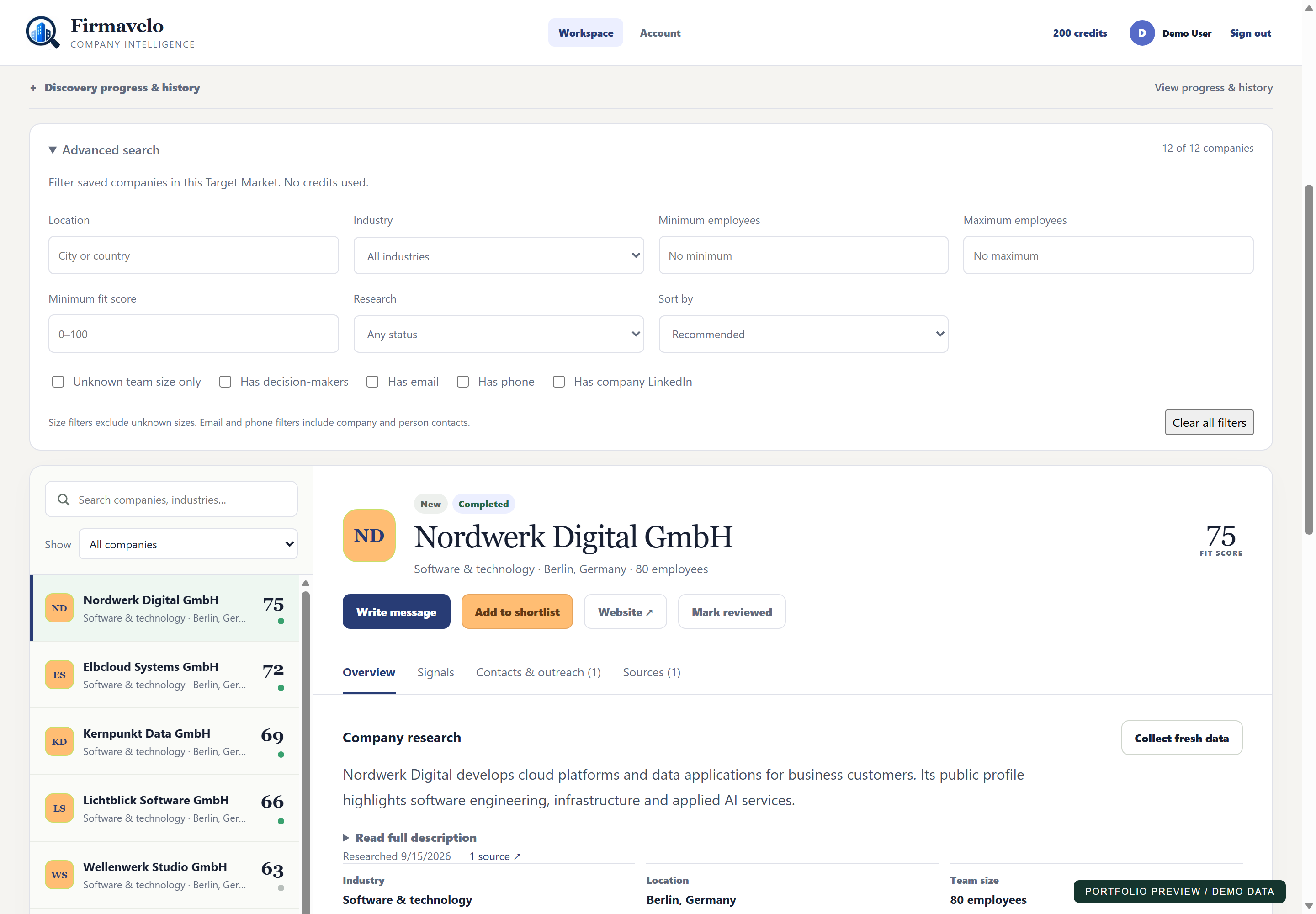
01 / Define a useful target market.
Start with services, location, industry, company size, and relevant contact roles, or import an existing company list. Advanced filters help narrow the candidates before investing in deeper research.
A full-stack workspace for freelancers to discover potential clients, research companies with source evidence, and prepare personalized outreach.

Finding freelance clients means moving between company directories, websites, public profiles, notes, and messaging tools. The research becomes fragmented, facts are difficult to verify, and a generic pitch gives a potential client little reason to respond.
FirmaVelo connects company discovery, reusable research, prospect qualification, contact discovery, and editable email or LinkedIn drafts in one workspace. Freelancers can inspect why a company might fit, follow the supporting sources, and review a personal introduction before sending it through an external app.
Screenshots are captures of the local application. Workspace screens use illustrative demo data, including company details, scores, contacts, credit balances, and draft text. Select a screenshot to inspect the original.
Start with services, location, industry, company size, and relevant contact roles, or import an existing company list. Advanced filters help narrow the candidates before investing in deeper research.
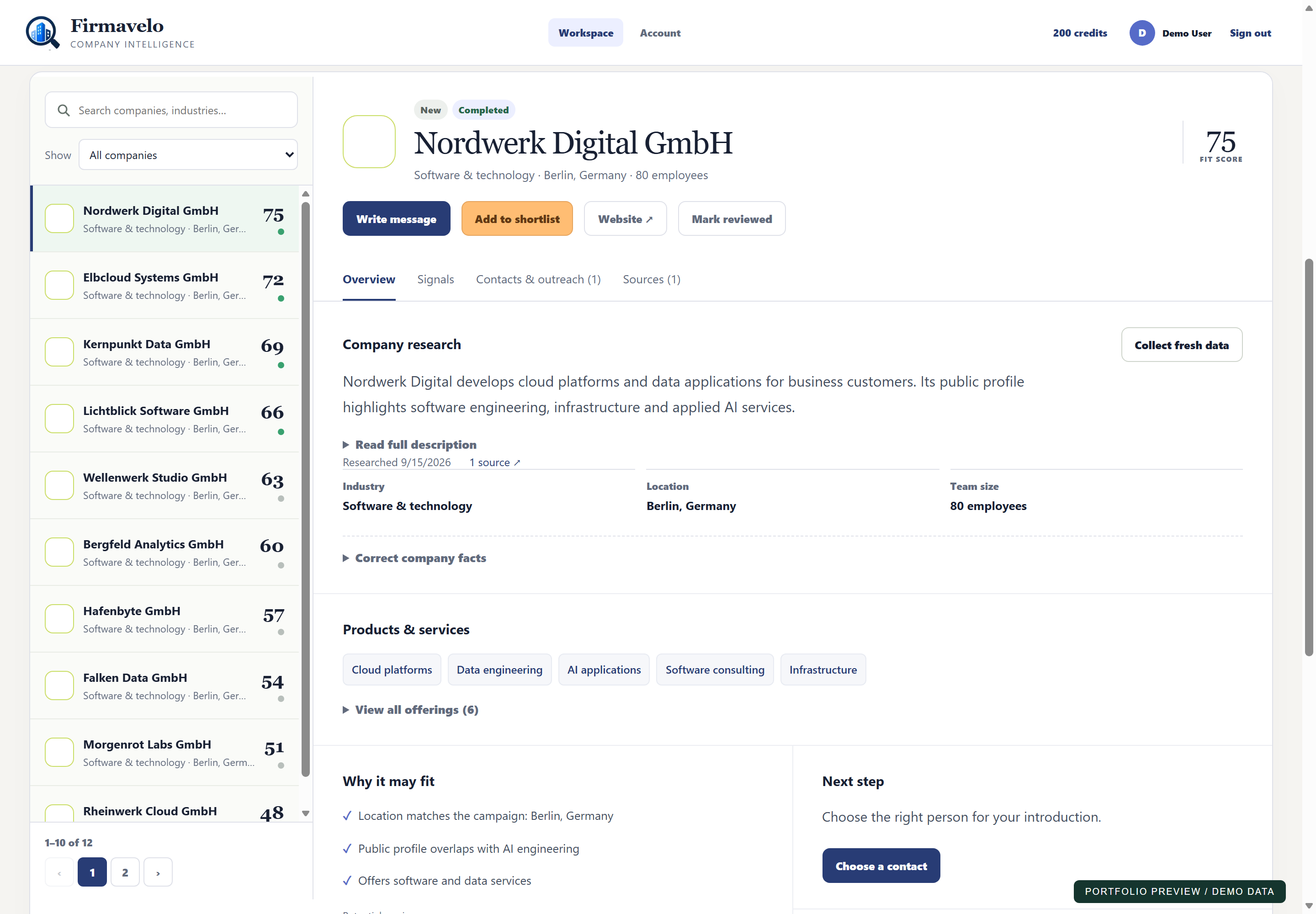
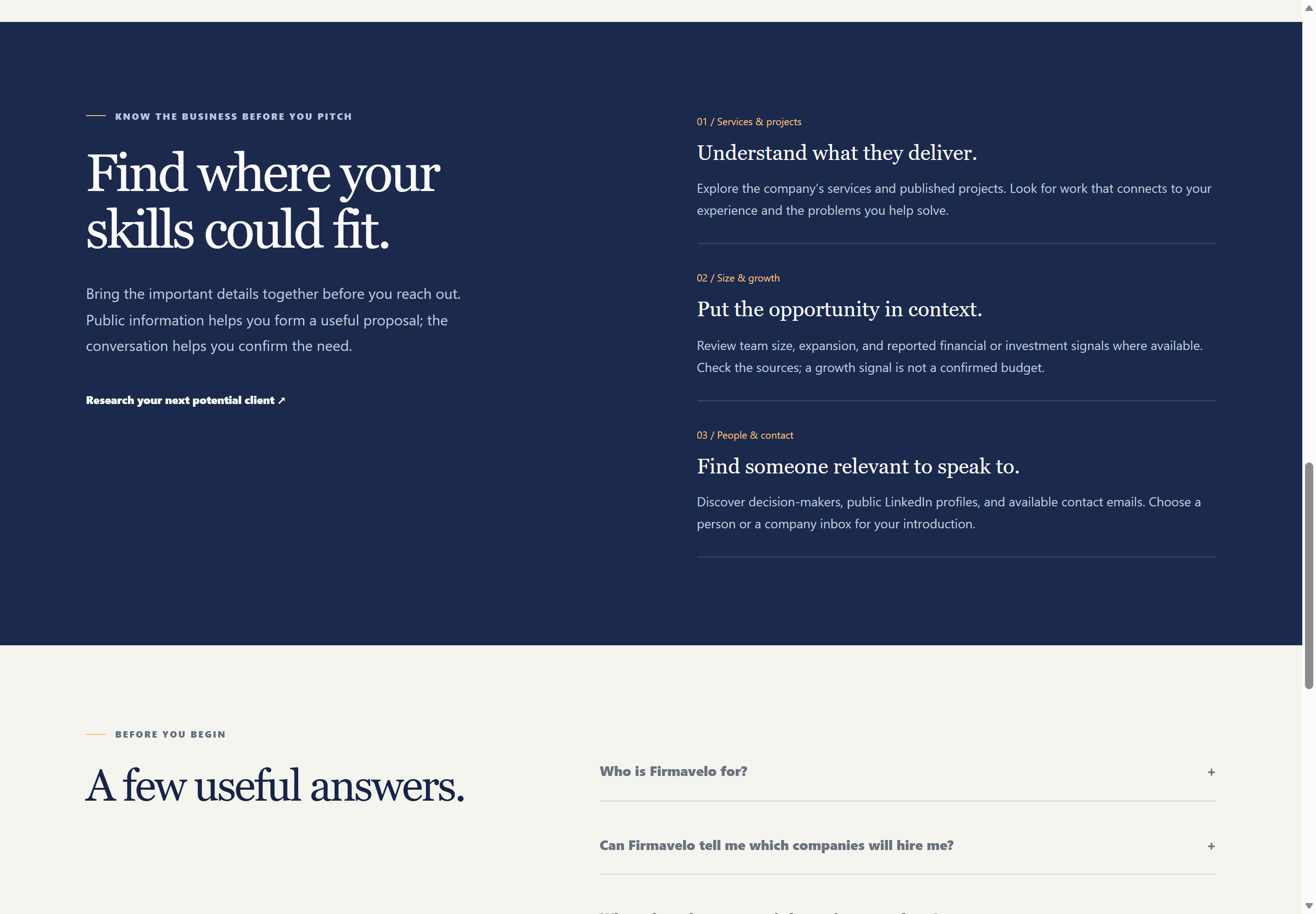
Company profiles bring together services, projects, team-size information, and reasons a business may match the freelancer’s offering. Users can inspect uncertainty, mark a company reviewed, and add promising prospects to a shortlist.
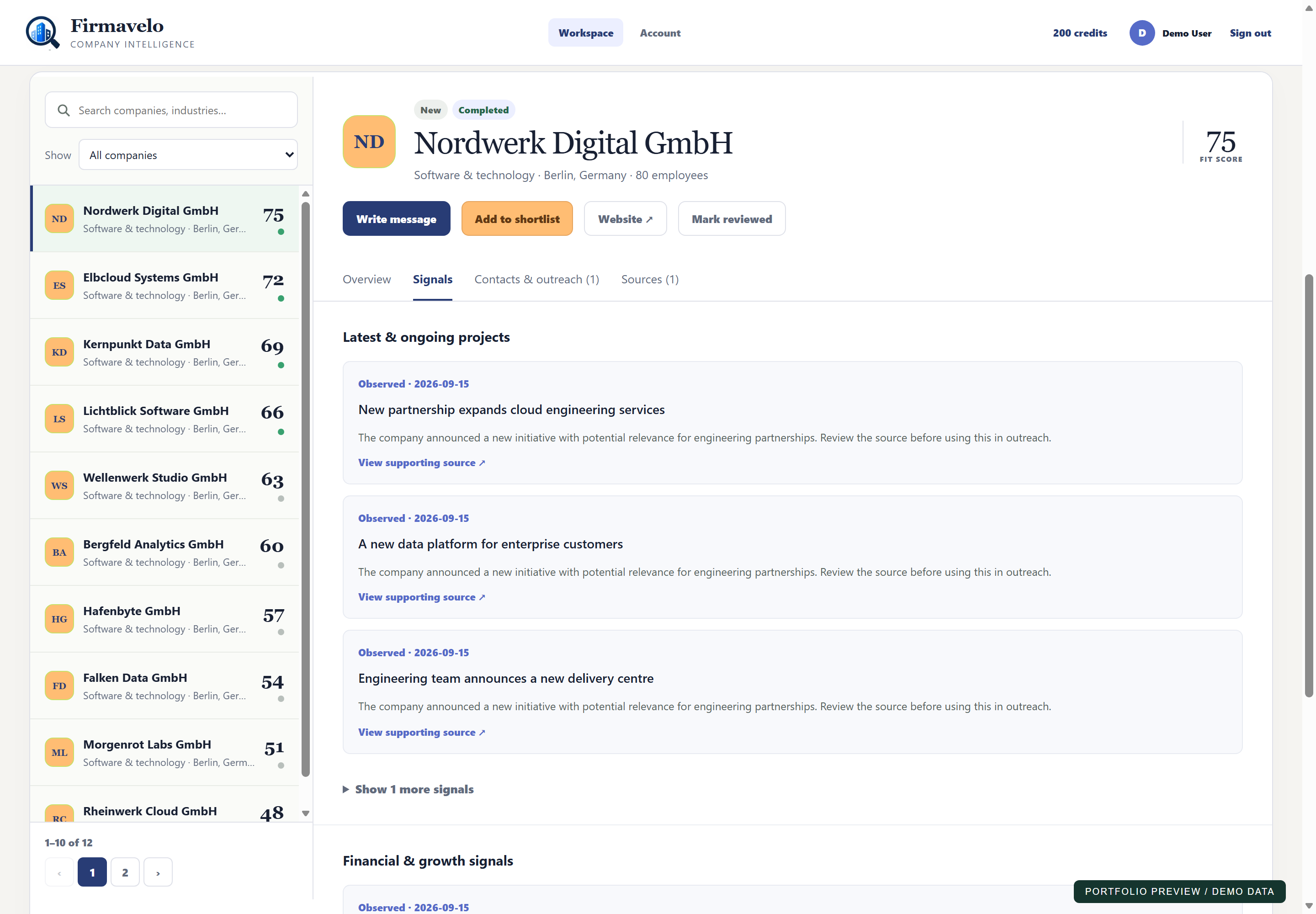
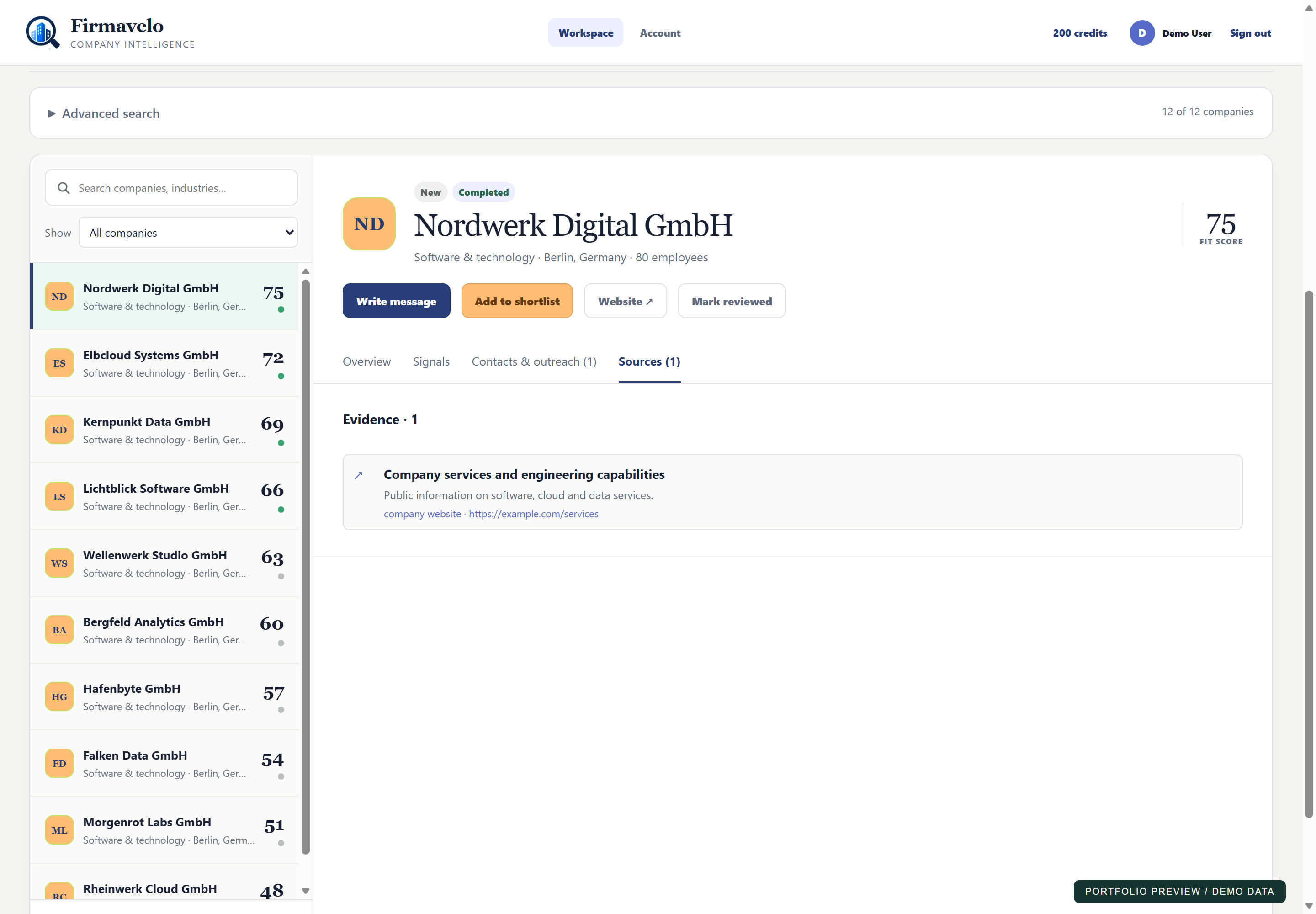
Business signals add context about projects and growth. The sources view keeps the underlying public information available for review, so a promising lead can be checked before it becomes an outreach decision.
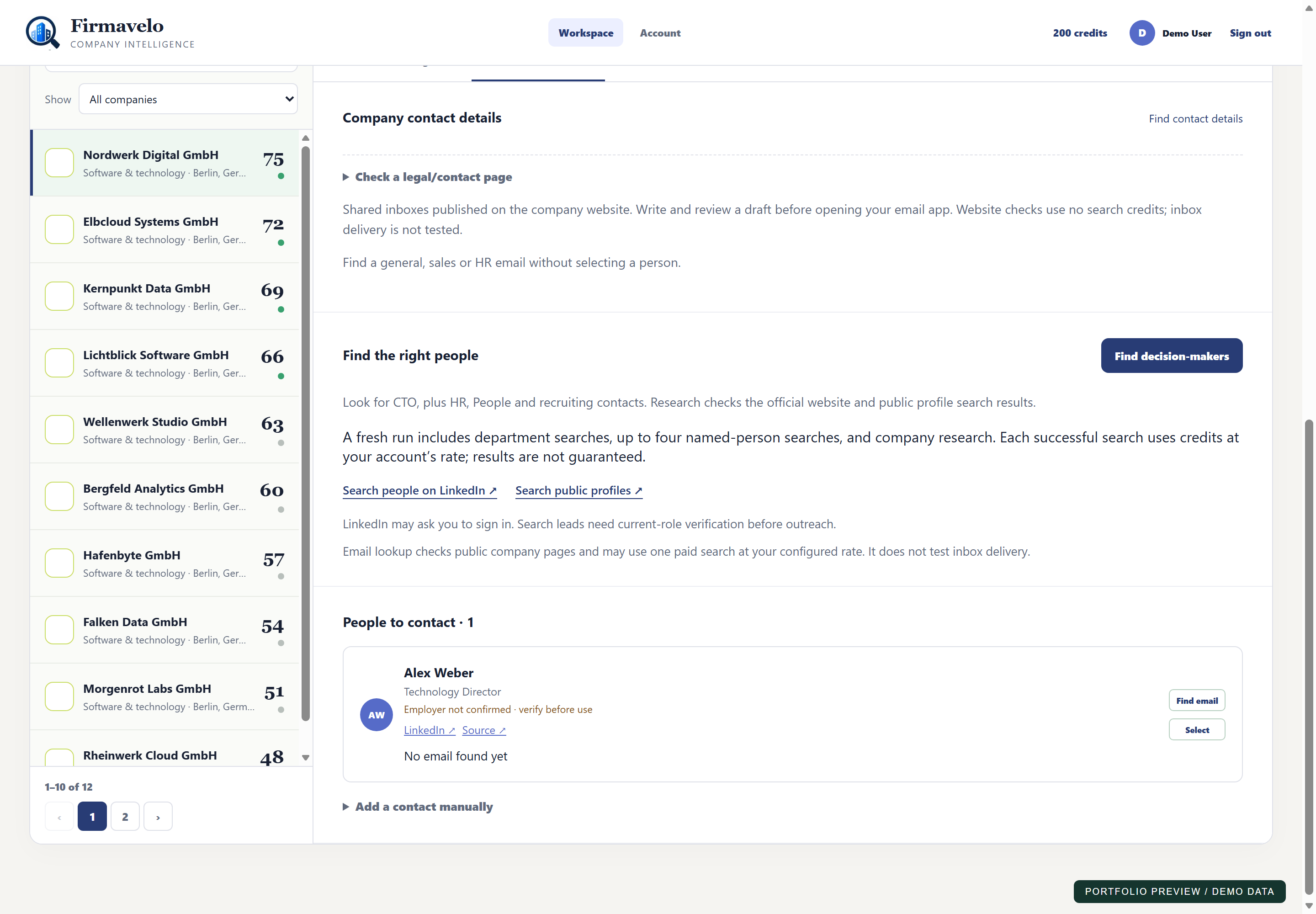
The contact workflow brings together decision-makers, public profile links, and available published contact information. Search leads are distinguished from stronger official-site evidence so users can judge what still needs checking.
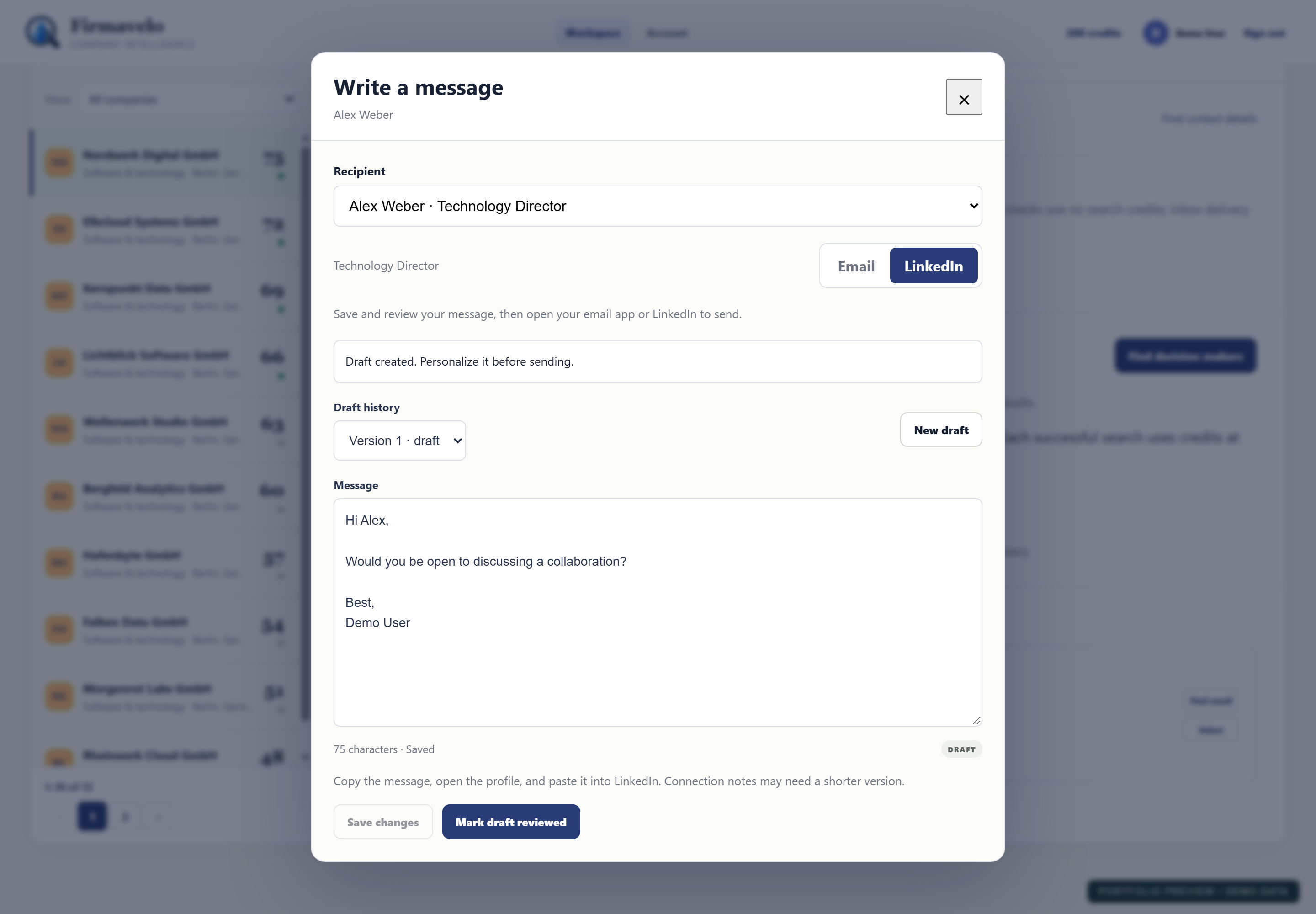
Email and LinkedIn modes support editing and reviewing an introduction in the context of a selected contact. The user saves the draft, marks it reviewed, and opens the appropriate external app to send it. The displayed message is fixture content; it does not demonstrate connected LLM inference.
Company research is reusable rather than tied to a single viewing session. Source evidence and freshness checks support revisiting existing work, while background processing handles research tasks beyond the immediate screen interaction.
Company discovery and public-information providers include GLEIF, Wikidata, and optional Brave Search. Keeping provider integration behind the backend gives the interface a consistent research workflow across different information sources.
Authentication, owner-scoped workspaces, and user/admin roles define access boundaries. Administrative monitoring provides an operational view of the application.
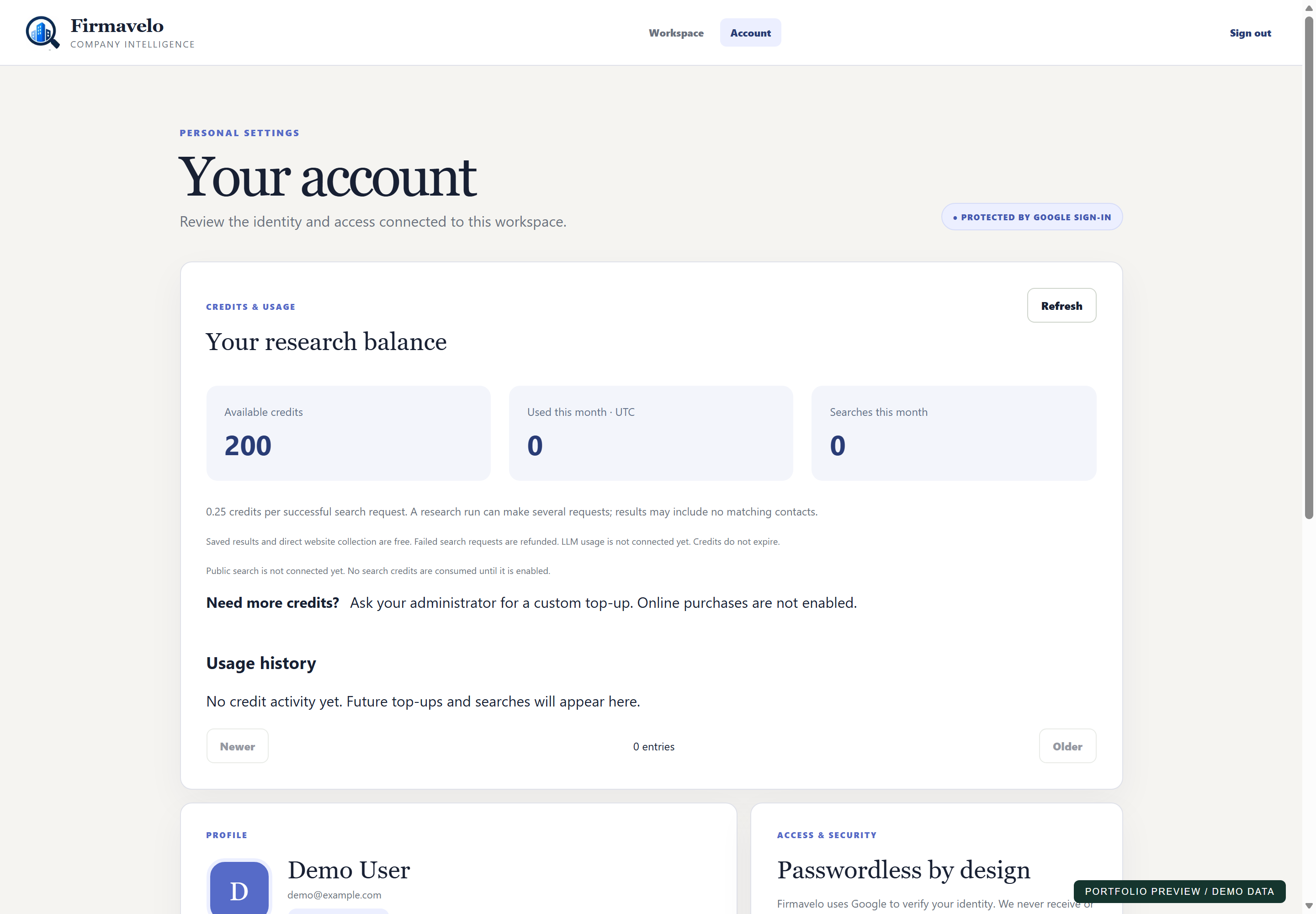
Usage credits include reservation, settlement, refunds, and a transaction ledger. This separates the balance reserved for work from its final charge and records adjustments when credits are returned.
The repository deployment setup includes GitHub Actions, Vercel, AWS ECR/App Runner, SQS, and Terraform. These describe the delivery and infrastructure configuration; they do not establish the current operating status of those services.
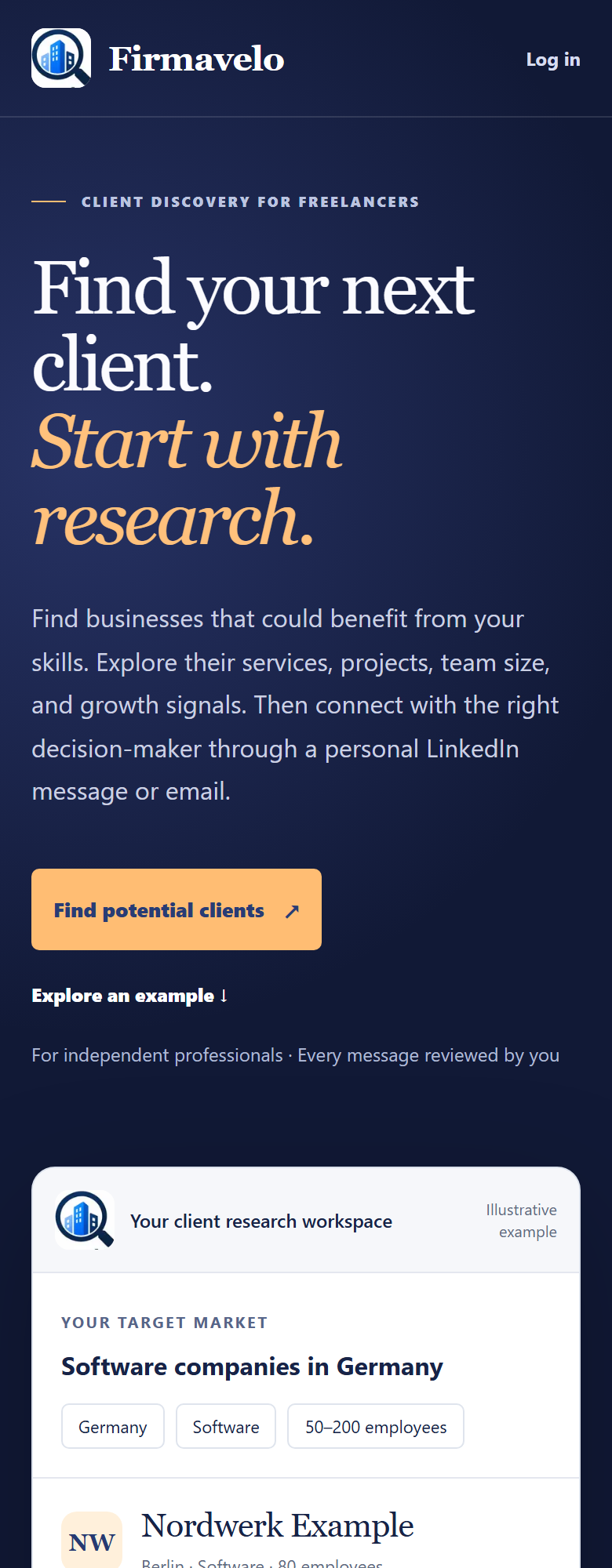
The responsive Next.js and TypeScript interface carries the product from its landing page into company research and message review on mobile. The supplied captures show how those tasks are presented in a narrow viewport.
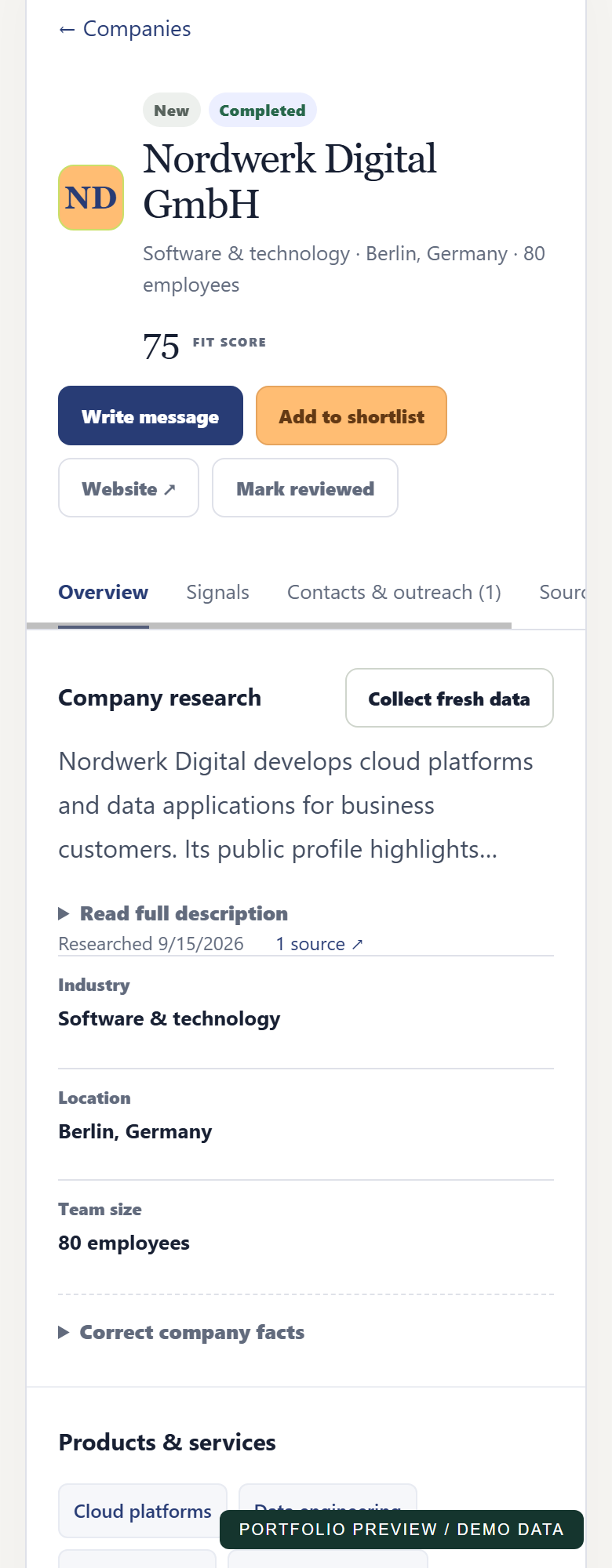
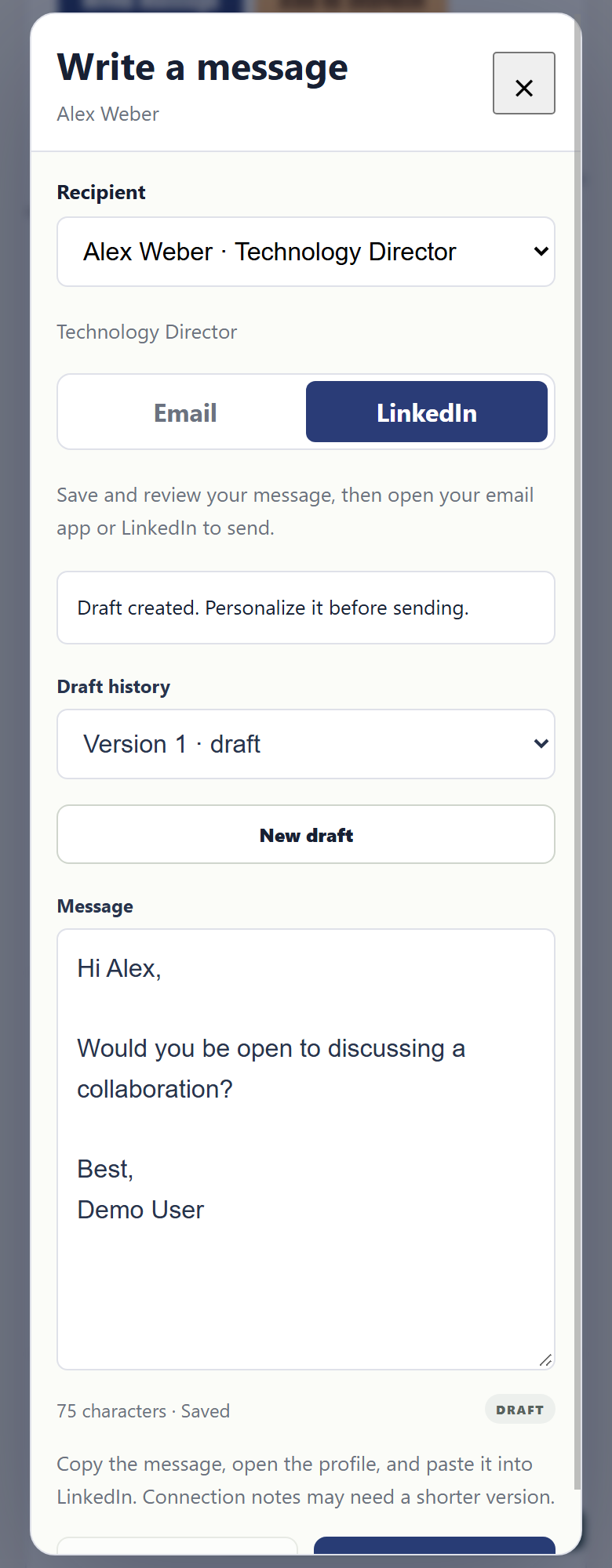
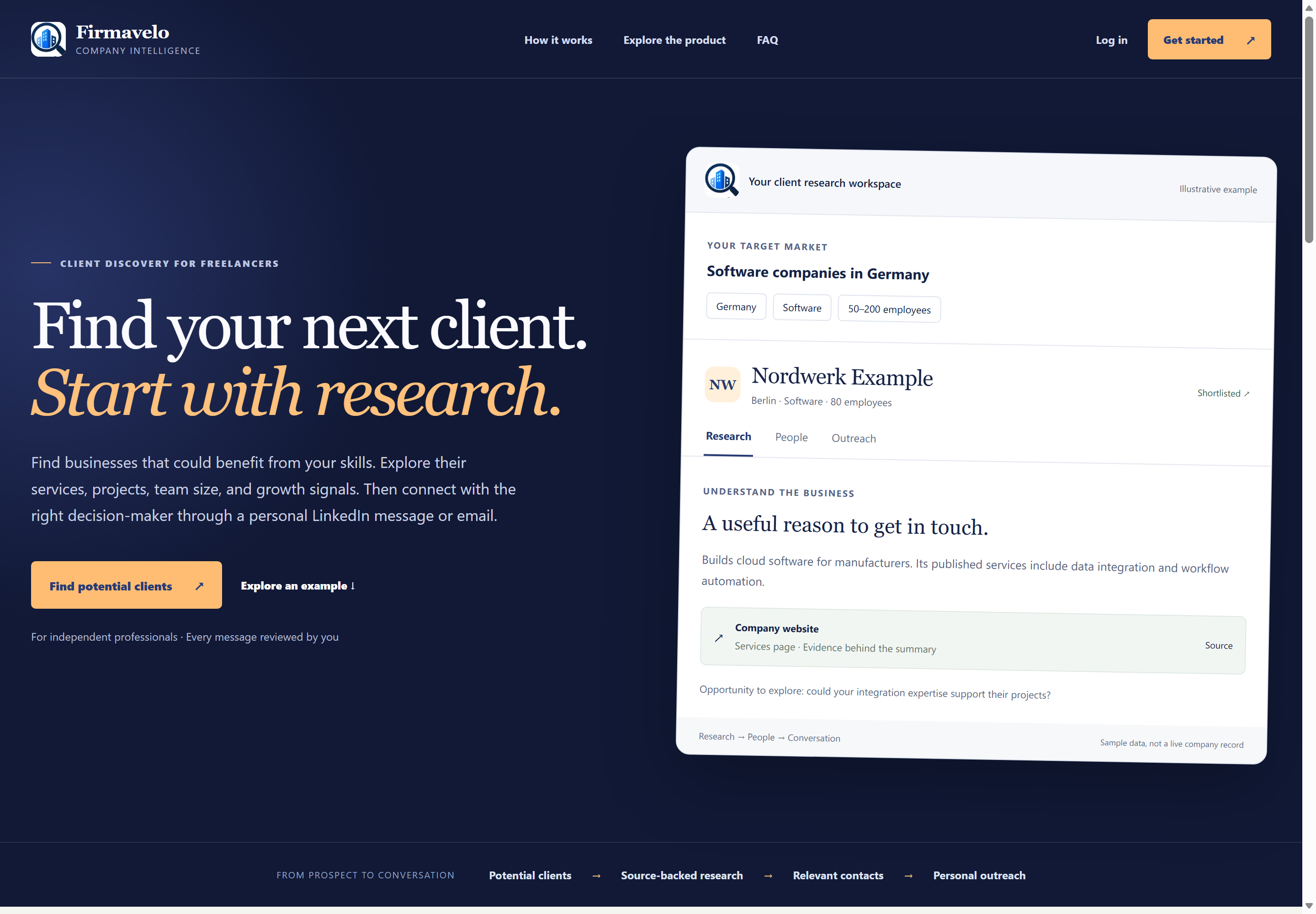
The implemented workflow combines discovery, source-backed research, qualification, contacts, and editable outreach drafts with account and usage-credit management. The result presented here is the product workflow itself, illustrated with demo data. No customer-acquisition outcome or measured performance improvement is claimed.
LLM inference is not connected in the documented implementation. Messages require human review and are sent through the user’s email app or LinkedIn.
Connect a useful interface with the data, background work, and account systems that support it.