One story. Different perspectives. Evidence you can inspect.
I founded and built MeydaNews to help readers, journalists, and researchers move from fragmented reporting to cross-source comparison and organized research.
My roleFounder & AI Engineer · Product, data, AI, backend, frontend, and cloud
ScopeStory discovery, source comparison, evidence search, and a private research workspace
The problem
More headlines do not explain the whole story.
Different outlets can report the same event with different claims, emphasis, and context. Comparing them manually means switching between feeds, finding original passages, and keeping track of what changed. MeydaNews brings those steps into one research flow.
The product
From finding a story to building a research trail.
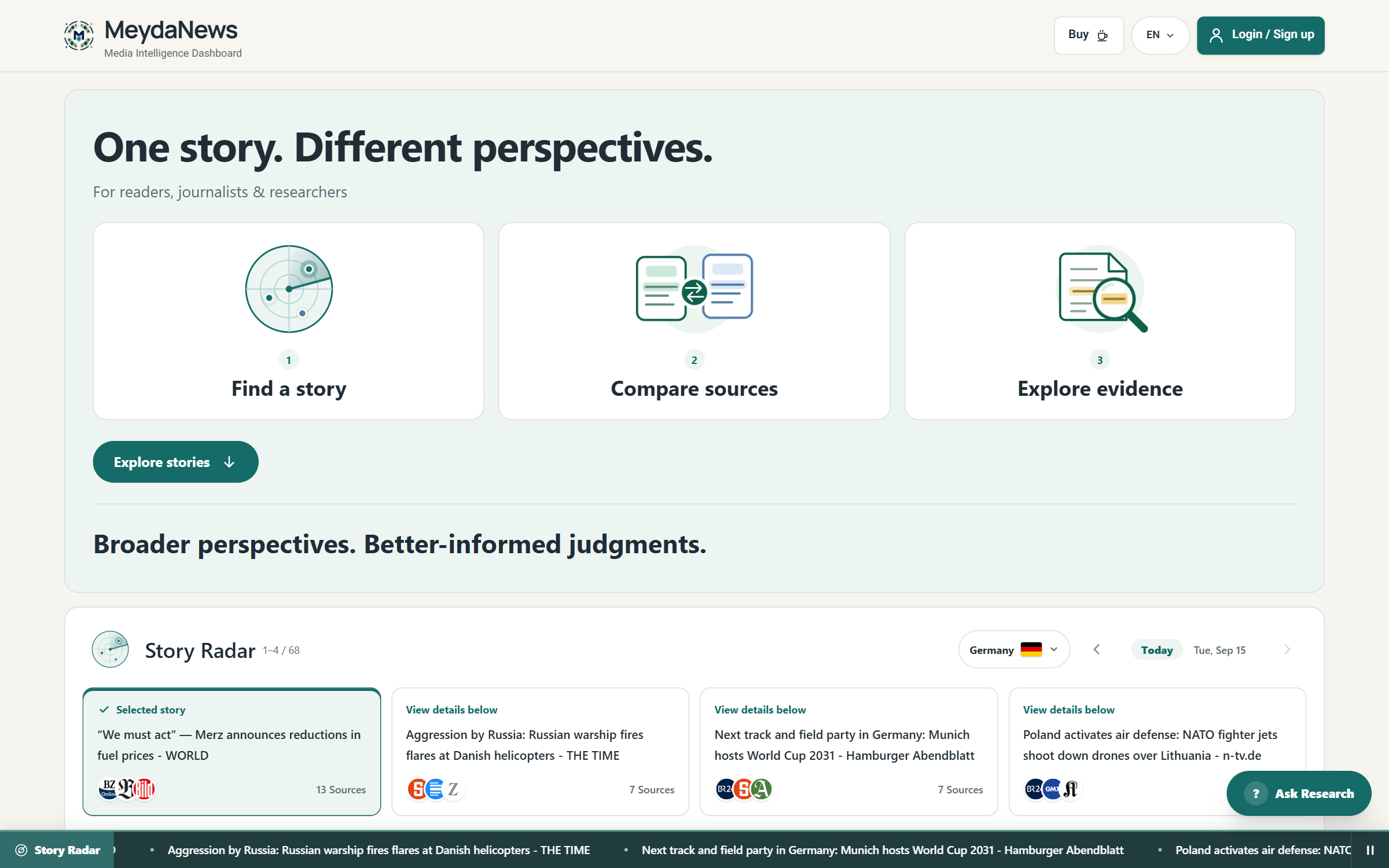
The product began with Persian-language media and now collects reporting across Iran, Germany, and the United States. These September 2026 screenshots show the English interface with German coverage. Select any screenshot to inspect it at full size.
MeydaNews homepage: the actual product interface for discovering stories and comparing sources.
Find a story, then compare coverage.
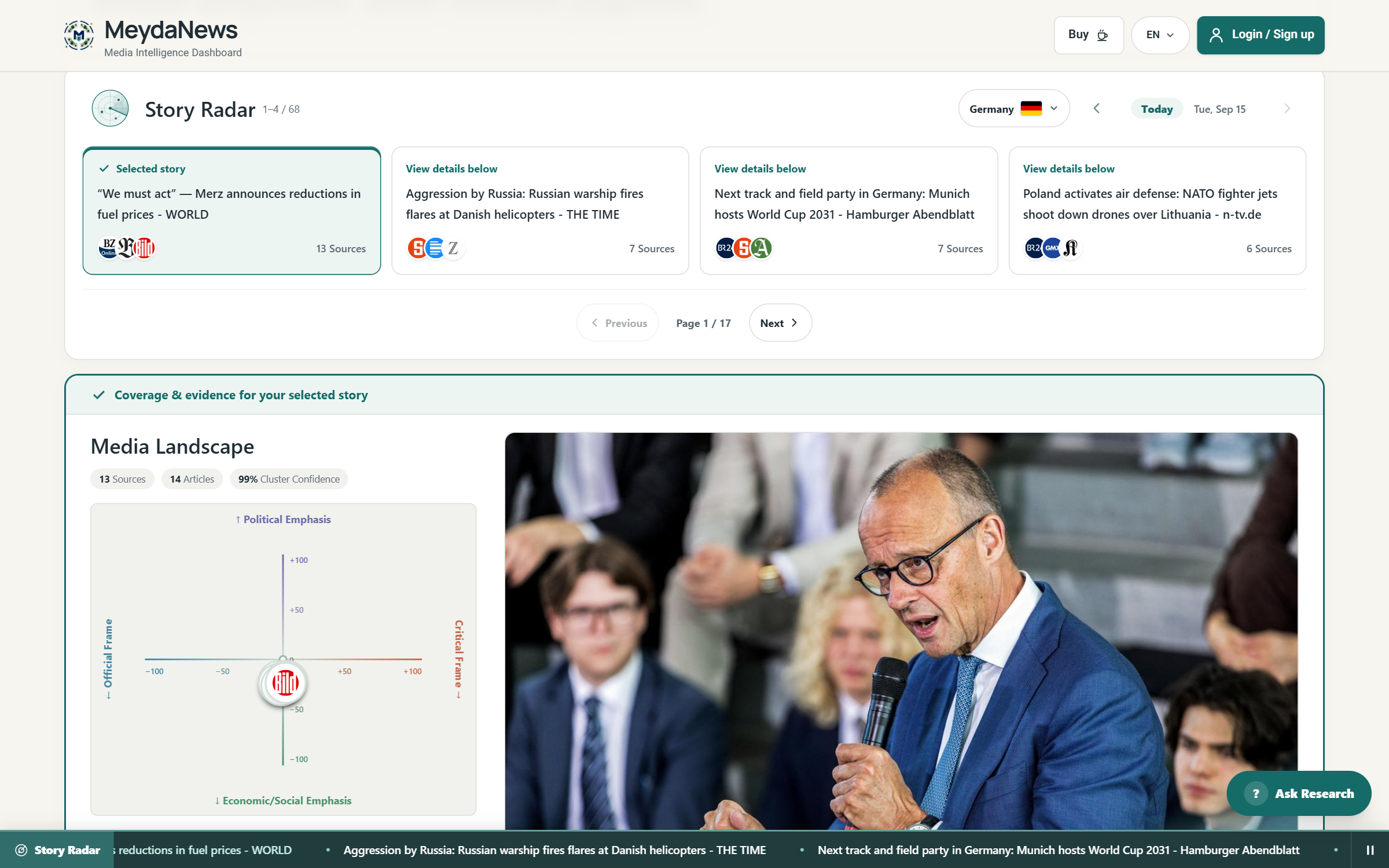
Story Radar groups related reports into events and shows participating publishers. Selecting a story connects discovery to its coverage, claims, and Media Landscape, where readers can inspect differences in framing and emphasis.
01 / Story Radar and Media Landscape. Source and article counts describe the selected story; cluster confidence is a matching signal, not a measure of factual truth.
Keep the original evidence within reach.
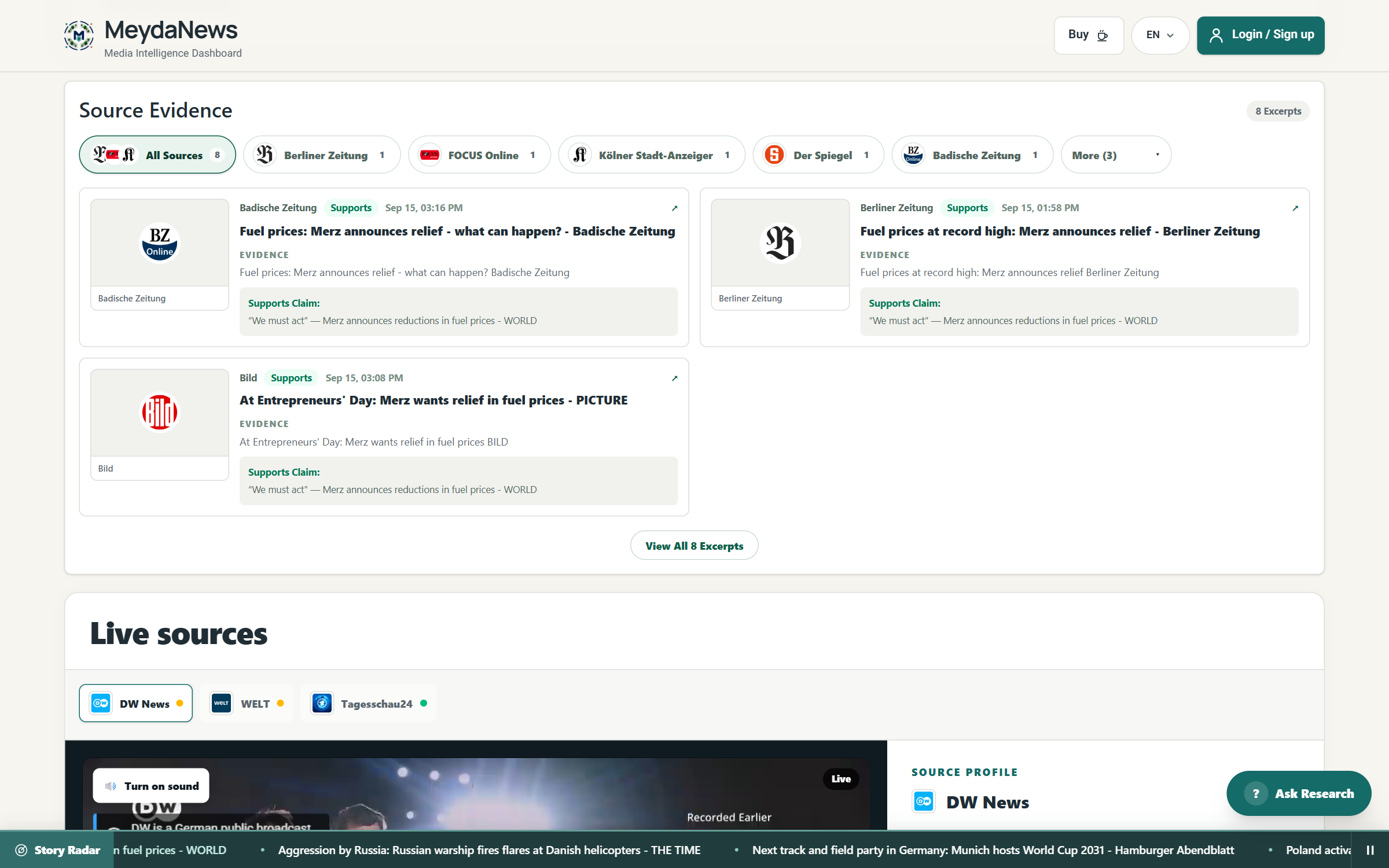
Source Evidence presents article excerpts with publisher names, timestamps, and original links. Source filters help readers inspect individual reports. The research workflow links results to stored article passages and can return an insufficient-evidence state when support is weak.
02 / Source Evidence. A support label connects reporting to a claim; agreement between outlets alone does not verify that claim.
Turn reading into an ongoing investigation.
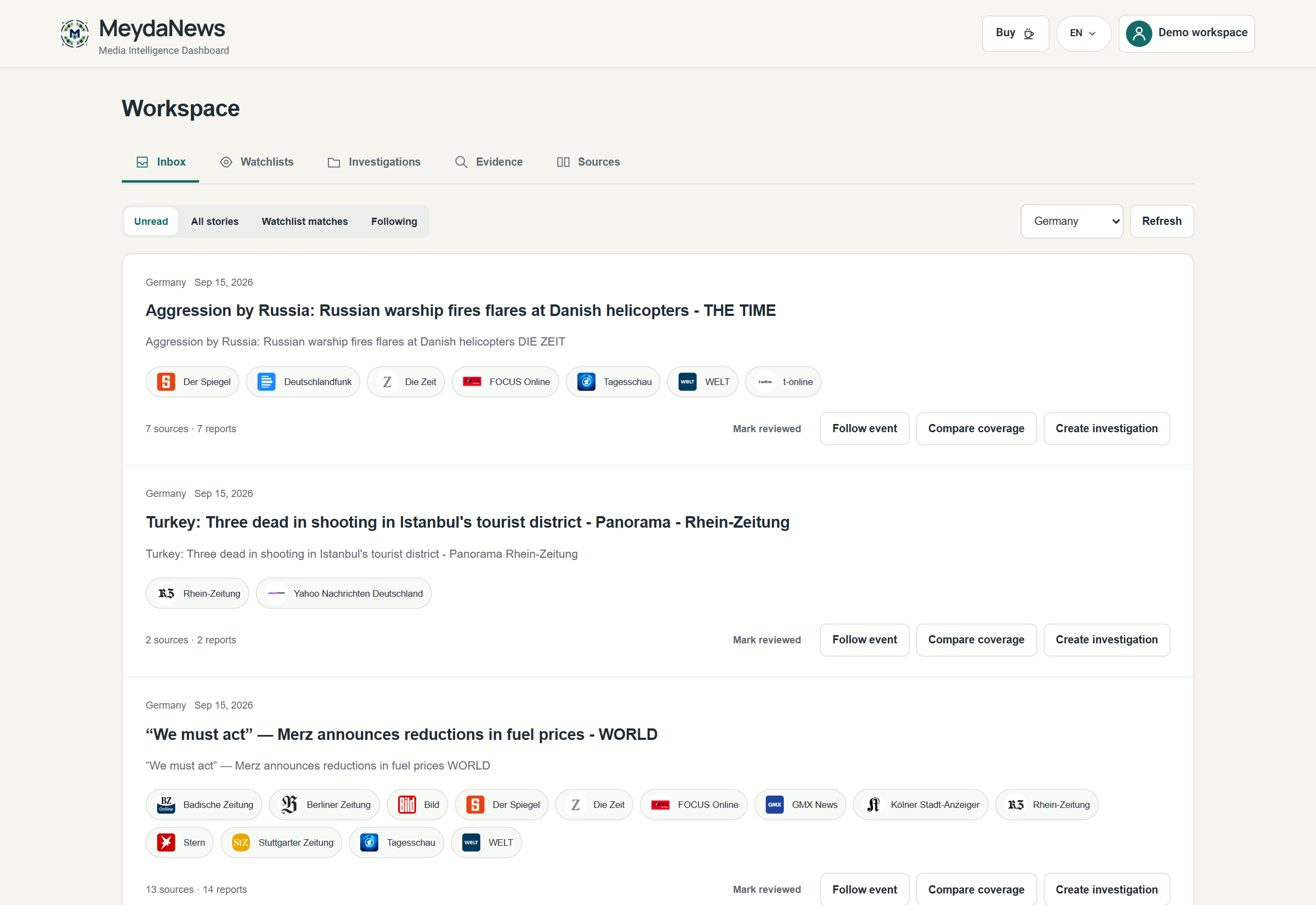
The private workspace brings together an inbox, watchlists, investigations, evidence, and sources. Users can follow events, compare two publishers, save original passages with notes, and assemble editable briefings with numbered citations. Review checkpoints help distinguish new coverage from reports already examined.
03 / Research workspace. The screenshot shows the inbox; the documented workflow continues into saved evidence, cited briefings, and Markdown or print-to-PDF export.
Watch live reporting with source context.
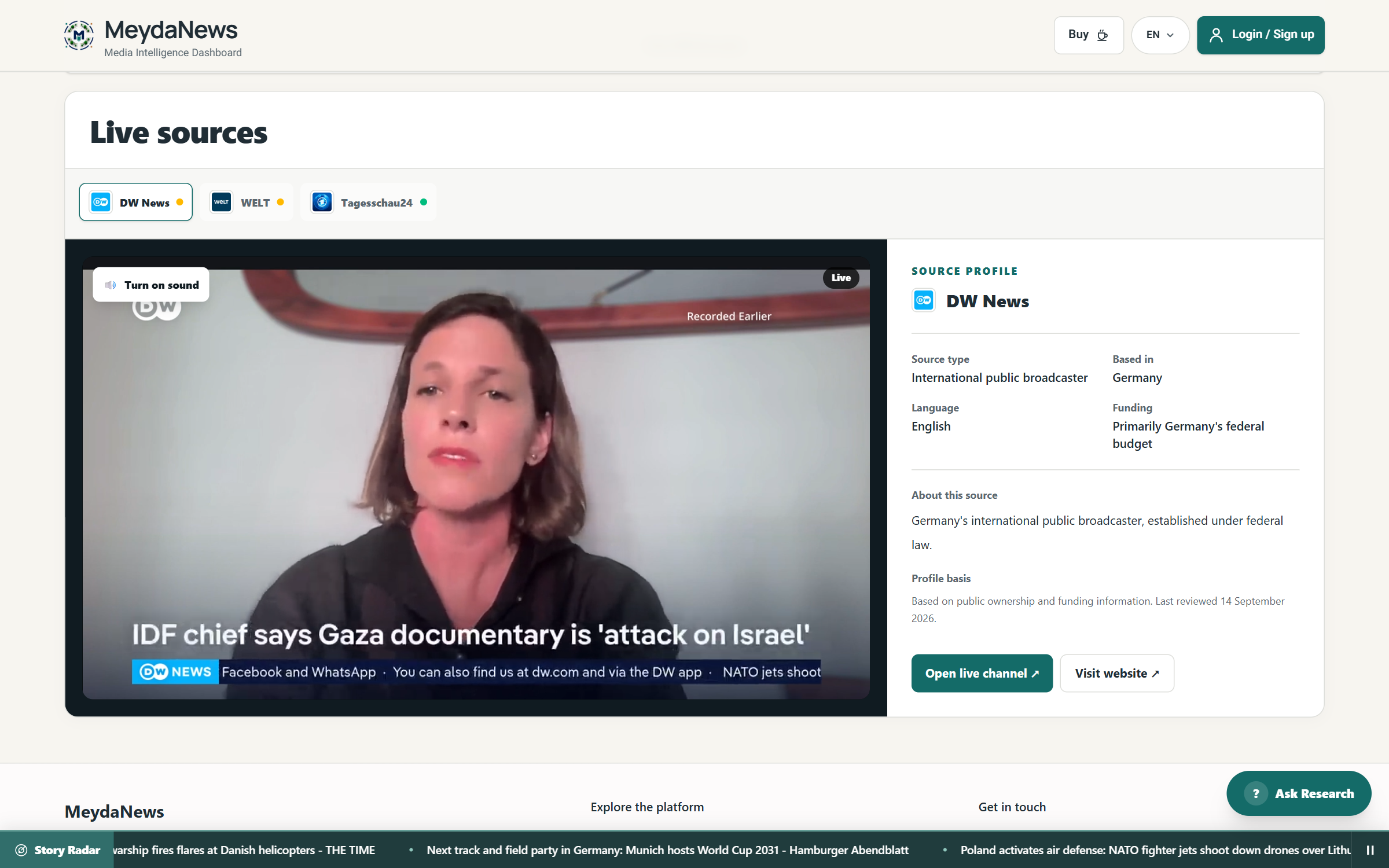
Live sources place a channel player beside a profile describing the broadcaster, language, location, and funding. Readers can switch channels or open the original stream, while the profile keeps the source’s context visible alongside its coverage.
04 / Live sources. Source profiles include their information basis and review date so readers can distinguish source context from story evidence.Engineering
A traceable path from collection to the interface.
I owned the product direction and implementation across the Next.js and TypeScript frontend, Python and FastAPI services, retrieval, and cloud delivery. The architecture separates predictable data processing from interpretation so that evidence remains traceable.
Collect and preserve. Scheduled six-hour collection gathers web, RSS, sitemap, and public Telegram reporting. Durable S3 snapshots provide a handoff and fallback between collection and enrichment.
Normalize and retrieve. Normalization, deduplication, and stable article chunks prepare content for PostgreSQL/pgvector search. Cached embeddings and canonical chunk IDs preserve evidence references during model backfills.
Connect related reporting. Each country has independent processing budgets and a rolling clustering window. Precomputed story data feeds the interface; research queries retrieve relevant passages before presenting supported results.
Keep research attributable. Saved passages retain their article, publisher, URL, and timestamps. Briefings snapshot their citations so later evidence edits do not silently change an existing draft’s references.
Product decisions
Trust comes from the details users can check.
Story-specific framing
Media Landscape describes how sources frame a particular event. It needs clear labels and user validation so readers do not mistake its axes for universal publisher scores.
Explicit language states
Localized interfaces and same-language content selection keep the reading flow consistent. Missing translations need a visible state; translation coverage and translation quality are separate concerns.
Human review stays central
Users can inspect original passages and edit briefing drafts. Briefings assemble saved evidence and notes rather than introduce new factual conclusions.
Operations as part of delivery
Terraform, CI/CD, monitoring, per-country processing limits, and failure/recovery alerts support repeatable releases and make pipeline health inspectable.
Result & next steps
A working product from story discovery to cited research.
MeydaNews connects collection, story clustering, source comparison, evidence retrieval, live channels, and a private research workspace. The screenshots demonstrate the current interface; the project documentation records the implemented workflows and operational foundation.
What still needs validation
The project documents mark clustering, claims, citations, translation, and professional research as early capabilities. Reviewed multilingual evaluations and sessions with journalists and researchers are the next proof points for accuracy and usefulness. This case study describes delivered functionality without claiming measured user impact.